

Anthropic's Claude: Data, Flows and Strategic Challenges for Europe
Who benefits from the vibe?
Claude is establishing itself as one of the most powerful artificial intelligence models for software development assistance, complex text analysis and long-form reasoning. This dominant position is based on demanding technological choices, massive access to capital and close integration within the American industrial ecosystem.
The objective of this analysis is to deconstruct, from a European perspective, the real implications of using Claude: data destination, financial circuits, legal and strategic dependencies, as well as the persistent absence of a comparable European alternative.
Legal nature and economic center of gravity of Anthropic
Anthropic is a US-incorporated company, established in the United States under the status of Public Benefit Corporation. This legal form introduces a public interest mission into governance, without questioning the economic purpose of the company or its jurisdictional anchoring.
Structural decisions concerning intellectual property, model architecture, commercial strategy and financial trajectory are made in the United States. The successive funding rounds, of exceptional amounts, were carried out primarily with American investors or strategic allies of the American technological ecosystem, including hyperscalers and major institutional funds.
The opening of offices in Europe, notably in Paris and Munich, improves local operational presence but does not modify the effective control center of the company. Governance, capital and decision-making capacity remain concentrated outside the European Union.
Processing and use of data from European users
Using Claude involves transmitting textual data or code to the infrastructure operated by Anthropic and its cloud partners. Even when service access occurs from the European Union, data processing is not necessarily limited to European territory.
Anthropic declares compliance with GDPR and offers contractual mechanisms adapted to professional clients. This compliance, however, guarantees neither exclusive data localization within the Union, nor complete independence from extra-European jurisdictions.
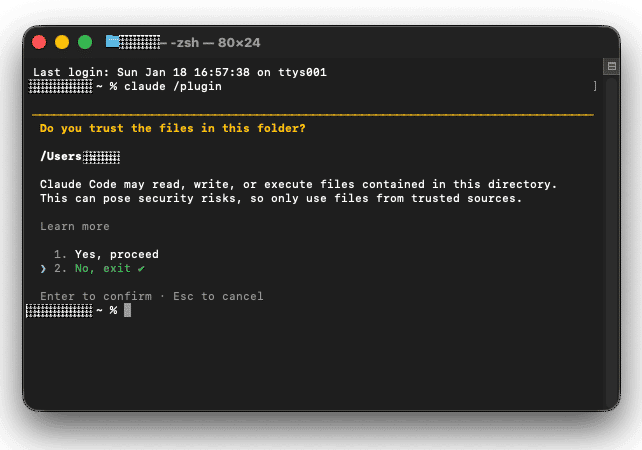
A particular point of attention concerns the use of data for model improvement purposes. By default, certain interactions may be integrated into training processes, unless explicitly opposed by the user. This logic, legally framed but operationally asymmetric, favors the constitution of an informational advantage benefiting a non-European actor.
Data produced by European users thus participate in enriching a strategic asset whose value and control largely escape Europe.
Circulation of financial flows and value creation
Revenues generated by Claude subscriptions and API usage are collected by Anthropic. They primarily finance research, computing infrastructure, highly qualified personnel costs and company growth.
The economic value created by Claude's adoption in Europe indirectly benefits Anthropic's investors and industrial partners, mostly located outside the European Union. Even when the cloud infrastructure used is physically located in Europe, the value chain remains dominated by American actors, both technologically and financially.
This results in a structural asymmetry: Europe contributes to the profitability and rise in power of a strategic actor, without controlling it or capturing a significant share of long-term value.
European regulation and technological dependence
The European Union has equipped itself with an ambitious regulatory framework regarding data protection and artificial intelligence. This framework aims to regulate uses, limit risks and protect fundamental rights.
However, regulatory capacity does not compensate for the absence of industrial control. Europe finds itself in a position where it regulates technologies it does not produce at the necessary scale, while depending on these technologies to maintain the competitiveness of its companies.
This situation creates lasting tension between normative sovereignty and operational dependence.
It limits the strategic maneuvering room of the Union facing actors with superior financial and technological power.
State of European alternatives
There are initiatives in Europe aimed at developing language models, sovereign infrastructures and solutions compliant with local regulatory requirements. These projects present certain interest in terms of governance, transparency and compliance.
However, at this stage, no European solution fully rivals Claude in terms of performance, industrial maturity and large-scale adoption for complex uses such as advanced software development.
This situation does not stem from a skills deficit, but from an investment differential, computing capacity and industrial coordination.
Strategic challenges for the European Union
Massive use of American AI solutions in European professional contexts reinforces structural technological dependence. This dependence exposes Europe to legal, economic and geopolitical risks, particularly in case of regulatory divergence or international tensions.
Long-term, the absence of a credible European alternative limits the Union's capacity to define its own technological standards and orient AI development according to its economic and societal priorities.
Vibe-outro
Claude currently constitutes a reference tool in intelligent assistance for development and analysis. Its adoption by European actors is understandable given the productivity gains it provides.
However, this adoption takes place within a framework where data, financial flows and strategic value generated primarily benefit an extra-European ecosystem. As long as Europe does not have comparable industrial capabilities in cutting-edge artificial intelligence, this asymmetry will persist.
The challenge is not to renounce using these technologies, but to lucidly recognize the dependencies they create and to engage, at continental scale, the necessary investments to reduce them.